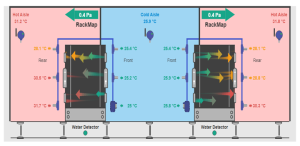
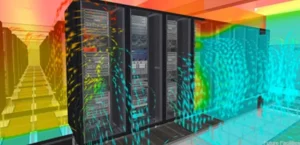
AI workloads are pushing data centers to ever higher rack densities. As data centers push for efficiency improvements through increased rack inlet temperatures, the margin for error has decreased. Despite advances in direct to chip liquid cooling technology, air cooling still plays a significant role in a hybrid cooling environment. Data center design has relied heavily on static Computational Fluid Dynamics (CFD) to predict airflow and cooling requirements. This kind of static CFD analysis does not account for the dynamic nature of a live data center. This paper examines the transition from static modeling to operational analysis. By combining physical