
Home » AKCP Blog » Quicklime Cloud for Server Rooms and Remote Sites | AKCP
Introducing Quicklime Cloud for Server Rooms and Remote Sites
Monitoring without a local Quicklime server
An on-premise monitoring platform can be the right choice when an organization needs to control its own software infrastructure. But not every team wants to add a monitoring server to its responsibilities.
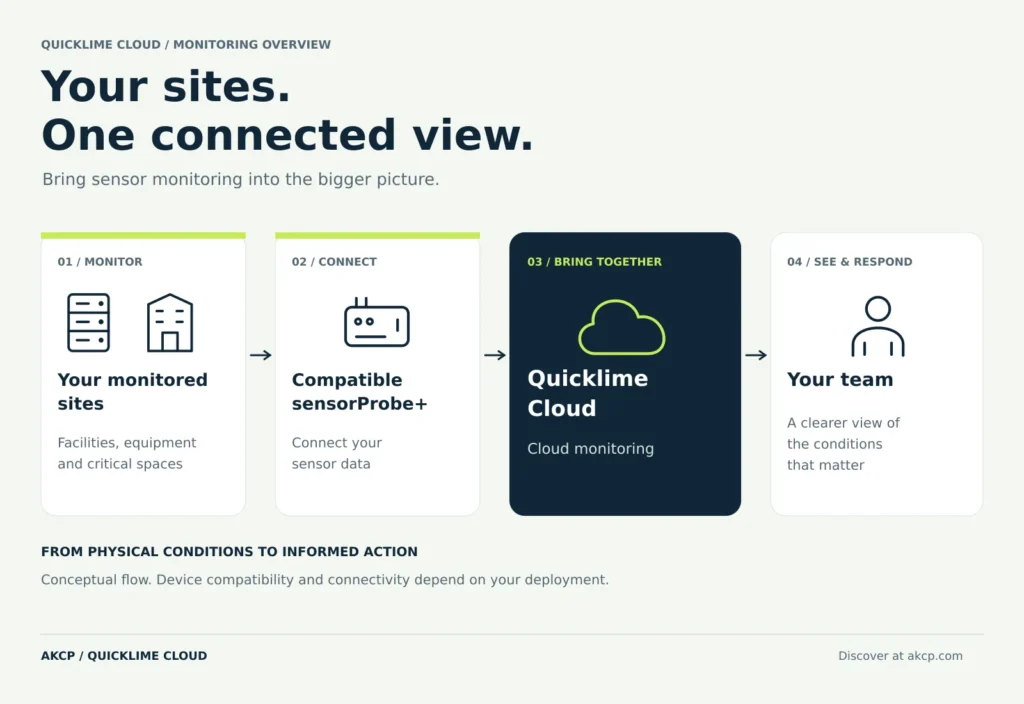
Quicklime Cloud offers another deployment route. The monitoring server is hosted by AKCP, while compatible devices and sensors remain at the locations being monitored. Teams access the platform through their web browser
Bring monitoring information together so people can spend more of their time reviewing conditions and responding to issues. Cloud hosting changes where the software runs; it does not replace the need for a well-planned sensor installation.
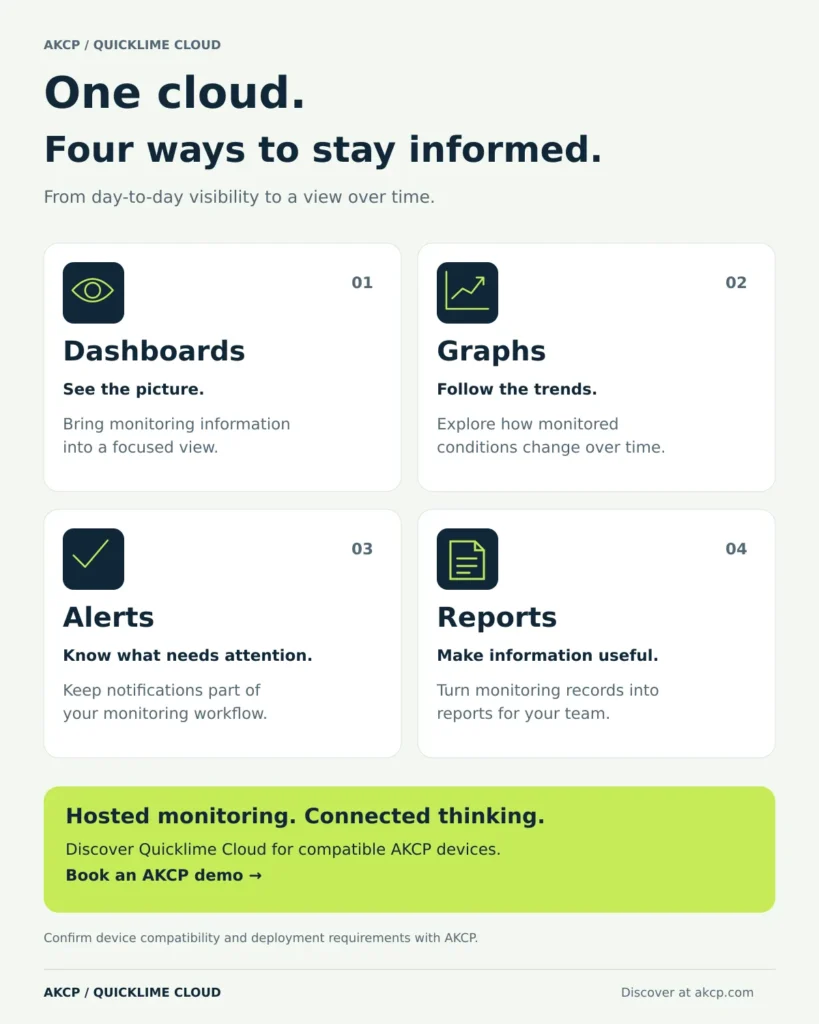
Four tools for the monitoring workflow
Dashboards for daily review
For organizations with equipment in different rooms or locations, bringing that information together can make the daily review more manageable. Setup customized desktops and dashboards, individual users can create desktop that shows the information they need.
Graphs for reviewing changes over time
The current value is only part of the picture. Graphs help teams examine how readings change over time, distinguish a brief event from a developing pattern and return to the data when investigating an issue.
For example, a temperature trend can give an operator useful context when reviewing a cooling concern. The graph supports investigation; it is not a substitute for checking the equipment and the conditions on site.
Alerts for conditions that need attention
Monitoring is most useful when the right people know when to investigate. Quicklime Cloud includes alerts as part of its monitoring capabilities.
Before rollout, teams should agree which conditions matter and who is responsible for responding. Test the configured alert workflow as part of commissioning, rather than waiting for the first real incident to find out whether the process works.
Reports for operational reviews
Reports help turn monitoring information into material that colleagues can review. They provide a basis for operational discussions, handovers and follow-up investigations.
Agree the purpose of each report before building it. A report for an operator may need a different focus from one prepared for a facilities manager. Clear questions lead to more useful reporting.
A focused cloud monitoring service
Quicklime Cloud is focused on dashboards, graphs, alerts and reports. It should not be confused with a full Quicklime DCIM deployment that includes rack mapping and broader data center management functions.
For customers whose priority is bringing sensor information together in a hosted service, that focus is the point. If your project also needs DCIM functions, discuss those requirements with AKCP so the deployment matches the job.
Plan the move before changing the connection
Existing AKCP customers should begin with a compatibility review. Confirm the device models, hardware versions and firmware, the locations to be connected and the monitoring points required.
If you are moving from AKCPro Server Cloud, coordinate the transition with AKCP. The connection method is different. Validate the Quicklime Cloud configuration, readings, alerts and reporting before retiring the old connection, rather than assuming the move is simply a change of login.
A small, representative first deployment is a useful way to establish the configuration before expanding it to more sites.
Book a Quicklime Cloud demonstration
Bring your device list, number of sites and reporting priorities to a demonstration. AKCP can help confirm compatibility, discuss the monitoring scope and prepare a quotation.
Book a 30-minute demonstration, or contact [email protected].
For setup guidance, explore the AKCP Quicklime tutorials.
- About the Author
- Latest Posts

For over two decades at AKCP, I have been focused on a single mission: bringing complete visibility, security, and efficiency to the world’s critical infrastructure.
I believe that in the modern data center, AI is only as good as the data it receives. My goal is to ensure facilities have the precise sensor facts needed to control AI opinions, ultimately reducing PUE, releasing stranded capacity, and ensuring maximum uptime.