
Home » AKCP Blog » Data Center Power Monitoring When the Megawatts Move On-Site
Data Center Power Monitoring When the Megawatts Move On-Site
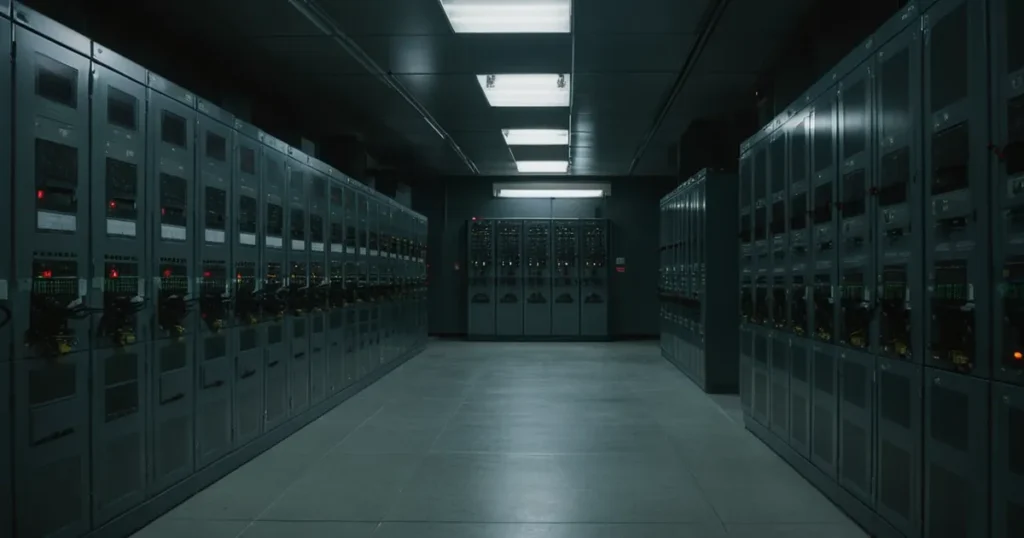
Summary: FuelCell Energy’s 380MW deal with Fit Energy is one more sign that securing power now decides whether a data center gets built at all. As operators move generation on-site, the utility bill stops being the source of truth, and every megawatt has to be measured where it is used. Data center power monitoring is how you prove what a power source actually delivers, from the feed down to the rack.
FuelCell Energy just signed a 380MW power agreement with Fit Energy to supply data center sites, and the number matters less than what it signals. Guaranteed power has become the thing that decides whether a facility gets built at all. When a fuel-cell maker’s supply deal is large enough to move how investors read the company, the megawatts have stopped being a line item and started being the whole business case. That shift is exactly why data center power monitoring is moving from an afterthought to a first-order question, because the moment your power stops arriving from the grid, you become the one who has to prove it is there.
Why securing power turned into the gating factor
For most of this industry’s history, land and cooling were the constraints you planned around. Power was assumed. You picked a site, you signed with the utility, and the electricity showed up. That assumption has broken.
AI clusters concentrate power demand faster than utilities can extend the grid to meet it. Interconnection queues now stretch for years in the busiest markets, and a project still waiting on a connection when the racks are ready is a project that stalls. The Uptime Institute and others have tracked how grid constraints, not construction, increasingly set the pace of the buildout.
So operators stopped waiting. On-site and behind-the-meter generation, whether fuel cells, gas turbines, or renewables paired with storage, has moved from a contingency you kept in your back pocket to a core part of the plan. The FuelCell Energy deal is one instance of a broader pattern. The reported 380MW agreement pins down a power source years before the load arrives, which is the whole point. The builds that clear are the ones that secured their megawatts early. The builds that die are the ones still holding a place in an interconnection queue that never opens in time.
What changes when the power comes from on-site generation
There is a second-order effect to bringing generation on-site that does not get the same attention as the deal headlines. When you buy from the utility, the meter at the property line is your source of truth, and someone else owns everything upstream of it. Your job starts at the fence.
Stand up fuel cells or turbines behind the meter and that boundary disappears. You now own the whole chain, from the generation asset through the switchgear and the busway down to the outlet in the rack. There is no utility meter doing the accounting for you. The responsibility for knowing how much power you are making, how much you are delivering, and how much is actually being used moves in-house, to you.
That is where data center power monitoring stops being optional. A 380MW source you cannot see into is not 380MW of usable capacity, it is 380MW of assumption. Owning the generation means owning the measurement, and the two arrive together whether you planned for it or not.
Where operators lose the megawatts they fought to secure
Here is the trap. You spend months and real money securing a power source, and then you manage the load underneath it the way you always have, by nameplate and by cushion.
You look up what the servers are rated to draw, add a margin for safety, and treat the sum as fact. Nameplate ratings are conservative by design, real draw swings with the workload, and the gap between the two is the exact thing you are trying to plan around. Manage a room that way and you leave headroom on every breaker you are not sure you need. Multiply that reflex across a floor and you have paid for power you will never confidently put to work.
Stranded capacity is the gap between the power you provisioned and the power you can prove you are using.
The opposite failure is just as costly. Run the racks closer to the edge to reclaim that headroom, keep no eyes on the draw as it climbs, and a breaker trips on a cabinet nobody had flagged. Both outcomes trace to the same root. You were deciding without a number. A hard-won 380MW is worth only the fraction of it you can measure and safely commit.
How AKCP delivers data center power monitoring from source to rack
Closing that gap is a measurement problem, and it is the one AKCP is built to solve. The point is not to watch a single meter at the generator. It is to follow the power the entire way down, from where it is made to where it is consumed, and to make every step of that path a live reading instead of a number on a drawing.
AKCP models the whole distribution path with Power Train, which maps power from the mainline through the distribution chain down to the individual outlet. Every stage is a measured point, not an estimate. Where a rack sits on a basic PDU that reports nothing, contactless current sensors clamp around the conductors already feeding it and read the draw with no rewire, no PDU swap, and no maintenance window, so even the racks you were never going to schedule an outage for start reporting. Per-outlet current and kWh turn “the room is drawing something” into a number you can attribute to a specific circuit.
That power data does not sit in a silo. It feeds a real-time PUE that AKCP computes as a first-class virtual sensor, graphed and alertable like any other reading, so the efficiency of the whole facility tracks live instead of being reconstructed from a spreadsheet once a quarter. Set a threshold against a breaker rating and get told when the draw climbs toward it, rather than finding out when it trips. All of it lands in Quicklime DCIM alongside the environmental picture, the temperature and humidity around the power, so a rising load and a warming aisle show up in the same place.
That is the difference that matters. We don’t just tell you where you have a problem, we tell you how to fix it. A secured power source becomes a measured one, from the generation asset down to the outlet, and nothing about the megawatts stays a guess.
From a signed power deal to a floor you can actually read
The FuelCell Energy agreement is a good sign for the industry. It says power is being treated as the strategic constraint it has become, and that operators are locking in generation early instead of gambling on the grid. Securing the megawatts is the hard, expensive first move.
It is not the last one. A power deal puts the capacity on your site. Monitoring is what turns that capacity into something you can plan against, defend to finance, and grow into without tripping a breaker you forgot to watch. The generation and the measurement are two halves of the same decision.
So once the deal is signed, the real question is a plain one. Do you know what your power is actually doing, from the source to the rack? Or are you still managing a 380MW investment by the nameplate and the cushion?
- About the Author
- Latest Posts

For over two decades at AKCP, I have been focused on a single mission: bringing complete visibility, security, and efficiency to the world’s critical infrastructure.
I believe that in the modern data center, AI is only as good as the data it receives. My goal is to ensure facilities have the precise sensor facts needed to control AI opinions, ultimately reducing PUE, releasing stranded capacity, and ensuring maximum uptime.
- Monitoring Solutions for Edge UPS Problems in Modern Data Centers
- Data Center Power Monitoring When the Megawatts Move On-Site
- AKCP Launches IPSet Mobile App for Fast sensorProbe+ Network Configuration
- Battery Room Ventilation Requirements: The Two Compliance Paths and the Monitoring That Proves Both
- Environmental Monitoring Systems (EMS): The Complete Guide for Modern Infrastructure