
AKCP Blog: Sensor & Digital Twin Technology
Explore technical guides, industry news, and engineering best practices for data center environmental monitoring. Discover how to bridge the gap between physical infrastructure and AI optimization.
When utility power returns, the UPS may resume normal operation before its batteries have recovered their previous backup capability. If another outage follows soon afterwards, the available runtime can be much shorter.

A small difference in UPS efficiency can produce a measurable electricity saving when the system runs throughout the year. To calculate it properly, use the efficiency at the load and operating mode you expect, then work out how much input power is required to deliver that output.

A UPS can keep equipment powered while a shutdown command is being delivered, but that does not mean the shutdown will finish in time. Applications, virtual machines, storage and hosts may need several minutes to stop in the correct order. Detection and control delays also consume the runtime budget.

Selecting a UPS battery bank means checking whether it can deliver the required power for the full backup duration. A battery's Ah label gives useful capacity information, but the manufacturer's constant-power discharge table is more directly applicable to many UPS sizing decisions.
A UPS runtime estimate answers a practical question: how long can the batteries support the equipment if utility power fails? The answer depends on the actual load, the battery bank and the conditions under which it is operating. The VA number on the UPS nameplate does not tell you its backup time.
An edge uninterruptible power supply (UPS) keeps local IT equipment running when utility power fails. Reliable backup power depends on three things: choosing a UPS that matches the load and power conditions, maintaining a healthy battery system, and monitoring the UPS status and performance.

On-site generation changes data center power monitoring. What operators need to meter when megawatts come from behind the fence, not just the grid.

Most data centers treat battery rooms as black boxes until a UPS drops the load or a hydrogen detector triggers a 2 AM shift call. Every battery chemistry broadcasts its own failure weeks in advance through minute shifts in thermal signatures, float current, and off-gassing. Surviving a utility drop requires moving past baseline fire code compliance and instrumenting the room for predictive, string-level telemetry.

AKCP, the world’s oldest and largest manufacturer of networked environmental, power and security monitoring solutions, has released AKCP IPSet, a new mobile application for iOS and Android that makes it faster and easier to discover and configure sensorProbe+ devices on a local network.
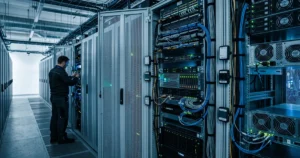
Summary: Battery room ventilation requirements exist because lead-acid batteries off-gas hydrogen during charging. The gas is colorless and odorless, rises, and pools at ceiling level; it becomes flammable at just 4% concentration in air. This guide explains the paths available for safety compliance and the monitoring evidence that keeps your room approved.